Share
A weekly reckoning with our overheating​ planet—and the fight to save it
 ‌ ‌ ‌ ‌ ‌ ‌ ‌ ‌ ‌ ‌ ‌ ‌ ‌ ‌ ‌ ‌ ‌ ‌ ‌ ‌ ‌ ‌ ‌ ‌ ‌ ‌ ‌ ‌ ‌ ‌ ‌ ‌ ‌ ‌ ‌ ‌ ‌ ‌ ‌ ‌ ‌ ‌ ‌ ‌ ‌ ‌ ‌ ‌ ‌ ‌ ‌ ‌ ‌ ‌ ‌ ‌ ‌ ‌ ‌ ‌ ‌ ‌ ‌ ‌ ‌ ‌ ‌ ‌ ‌ ‌ ‌ ‌ ‌ ‌ ‌ ‌ ‌ ‌ ‌ ‌ ‌ ‌ ‌ ‌ ‌ ‌ ‌ ‌ ‌ ‌ ‌ ‌ ‌ ‌ ‌ ‌ ‌ ‌ ‌ ‌ ‌ ‌ ‌ ‌ ‌ ‌ ‌ ‌ ‌ ‌ ‌ ‌ ‌ ‌ ‌ ‌ ‌ ‌ ‌ ‌ ‌ ‌ ‌ ‌ ‌ ‌
A weekly reckoning with our overheating​ planet—and the fight to save it 

View in browser

Apocalypse Soon: A weekly reckoning with life in a warming world—and the fight to save it

A weekly reckoning with our 

overheating​ planet—and the fight to save it 


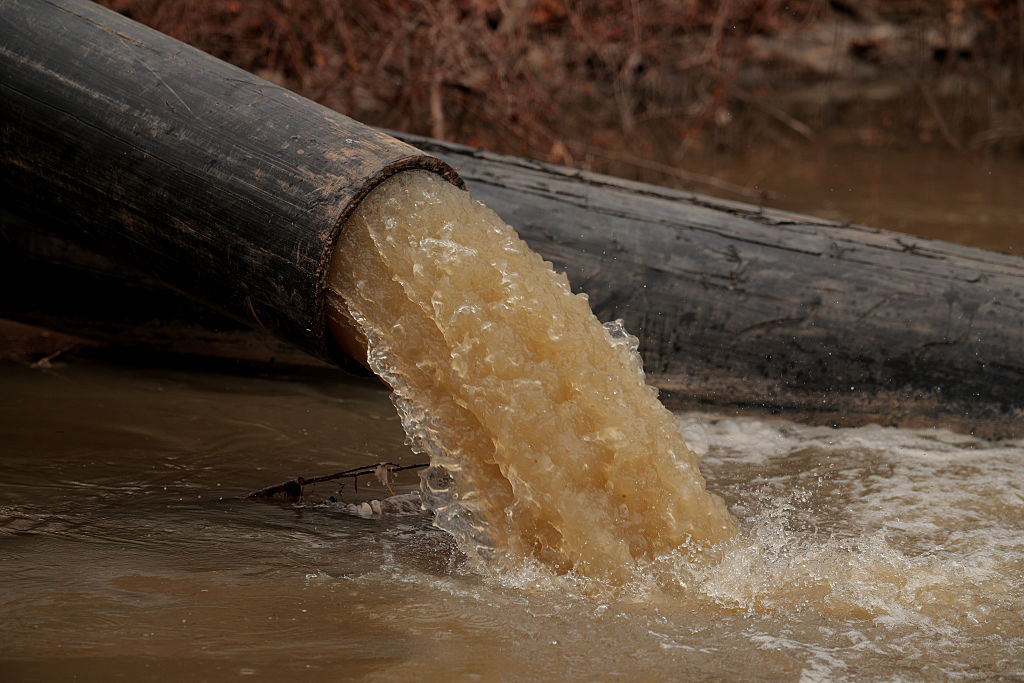
Pipes divert raw sewage around a broken section of the Potomac Interceptor in Cabin John, Maryland Chip Somodevilla/Getty Images


Why is water so different from air? It sounds like the start of a joke. But it’s a fair thing to wonder after the Trump administration last week officially revoked the so-called endangerment finding, a 2009 scientific conclusion that climate change threatens human health and that greenhouse gases were therefore an appropriate subject for federal regulation under the Clean Air Act.


This move paves the way for the elimination of all federal regulation of greenhouse gas emissions. These rollbacks may kill a lot of people long before the associated climate effects kick in, though, because the emissions that the government has been regulating also reduce general pollution. The Environmental Defense Fund projects that the rollbacks could trigger an extra 37 million asthma attacks between now and 2055.


The Trump administration is not at all concerned about blowback, though, and in fact was making victory laps much of last week, with Interior Secretary Doug Burgum saying that all the extra carbon dioxide in the air would be good for plants.


Contrast that with how eagerly President Trump is trying to blame Democrats for a recent large sewage spill into the Potomac River.


"Maryland, Virginia, and Washington, D.C., who are responsible for the massive sewage spill in the Potomac River, must get to work, IMMEDIATELY," the president posted Tuesday on Truth Social. "If they can’t do the job, they have to call me and ask, politely, to get it fixed. The Federal Government is not at all involved with what has taken place, but we can fix it," he added. "This is a Radical Left caused Environmental Hazard."

Join us: What’s Next for the Democrats?

Tuesday, February 24 · 4–5 p.m. EST

To complement The New Republic’s March 2026 issue, "What Should the Democrats Do?" our writers examine how the Democrats can reestablish themselves as the party of and for the people, hone their messaging, and push the electorate to be more progressive.

RSVP now

None of this is true, of course—as Maryland Governor Wes Moore pointed out, the federal government is actually responsible for overseeing the segment of sewer line that failed. And maybe that’s why Trump decided to weigh in. 


But this is also an odd issue for Trump to highlight. Although the spill of over 200 gallons of raw sewage is widely being referred to as the largest in the nation’s history, it hasn’t resulted in any boil-water advisories yet—and water quality is not exactly a signature Trump issue anyway. In his first administration, he scrapped the Clean Water Rule, significantly narrowing the scope of federal water protections. This time around, his administration is also attempting to roll back federal protections.


This isn’t the only story recently suggesting that clean water may have political significance that clean air doesn’t. Last week, Charlie Hope-D’Anieri wrote about the wild-card candidacy of a retired water scientist running for secretary of agriculture in Iowa. Chris Jones almost certainly will not win, Hope-D’Anieri acknowledged. But he’s upending long-standing, almost sacred conventions in Iowa politics by challenging the ethanol industry, and arguing "that farmers should be required to make basic, specific adjustments to their practices to prevent the ruination of the state’s water supply." And, perhaps surprisingly, he’s getting some traction, including good turnout at campaign events.


On Tuesday, Inside Climate News reported a new poll that suggests Jones’s early success is not just a freak accident. "Eighty-five percent of voters in Iowa’s first and third U.S. House districts," reports Anika Jane Beamer, "say they would be more likely to vote for an elected official who prioritizes protecting clean water, including cutting industrial agriculture pollution." These are both "vulnerable, narrowly Republican districts," Beamer notes. It’s not impossible that these will be some of the districts that determine whether Democrats flip the House in November.


"It’s very clear that Iowa’s water crisis has reached a boiling point," Food & Water Action political director Sam Bernhardt reportedly said at a press conference announcing the poll results. 


Now, you might be inclined to dismiss any single poll along these lines—and it’s worth noting that Food & Water Action did commission this one. But it’s also consistent with prior polling showing that water quality is a strikingly popular issue, which doesn’t seem as vulnerable to the partisan divides seen on other environmental topics. Pew polling from 2023 found that 63 percent of people thought the federal government was doing "too little" to "protect water quality of lakes, rivers and streams," and only 7 percent said it was doing "too much"—making it the top issue when compared to air quality, climate change, protecting animals and their habitats, and protecting natural parks and nature preserves. 


Regular polling from the Value of Water Campaign has also found that the number of voters calling "reliable water access" a "very" or "extremely important" issue has been rising for five years straight.


There are some caveats, of course, to how far political concern over water quality can go. The water crisis in Flint, Michigan, reached appalling levels for years, and it didn’t seem to make a huge political difference. A lot of people are comfortable ignoring quality issues with other people’s water.


Still, the political relevance of water availability and quality doesn’t seem likely to fade in the near future. It’s a key concern for the MAHA segment of Trump’s supporters. And the water crisis playing out in the American West, as the Colorado River dries up, is only getting worse, affecting both blue states and red. This past weekend, the seven states trying to negotiate a solution to this missed their deadline for a second time. 


Water might not be a deciding factor in the midterms this November—there are a lot of issues that might take that prize. But as a political issue, it’s not going away.

—Heather Souvaine Horn, deputy editor


The GOP Has Become a Single-Issue Party. The Issue Is Elite Impunity.

From protecting rapists to shielding Monsanto or helping Big Oil avoid climate change lawsuits, Republicans are showing their true agenda.

By Aaron Regunberg

Read now
 

Stat of the Week

3 degrees Celsius

That’s the level of global warming a new report says governments need to prepare for—double the 1.5 degree Celsius (2.7 degree Fahrenheit) limit that leaders agreed to in 2015.


What I’m Reading

As Trump Obliterates Climate Efforts, States Try to Fill the Gap

As the Trump administration scraps the endangerment finding, Maxine Joselow has a timely report for The New York Times about how some states are trying to step up in the climate fight.

The end of federal greenhouse gas limits is an obstacle, but not a death knell, in the fight against climate change on the state level, experts said.


Colorado helps explain why.


In 2019, Gov. Jared Polis, a Democrat, set an ambitious goal of reducing the state’s greenhouse gas emissions 50 percent by 2030, from 2005 levels. Colorado is now on track to meet this goal by 2032, a two-year delay for which local leaders have largely blamed the Trump administration’s environmental rollbacks.

The New York Times | Maxine Joselow


Angry Trump Humiliated as Effort to Prosecute Dems Backfires Again

A grand jury laughed Trump’s prosecutors out of court—but new details about these nakedly political prosecutions reveal serious abuses of power that are no laughing matter.

By Greg Sargent

Read now
 

 Update your personal preferences for _t.e.s.t_@example.com by clicking here


Our mailing address is:

The New Republic, 1 Union Sq W Fl 6 , NY , New York, NY 10003-3303, United States


Do you want to stop receiving all emails from ? 

Unsubscribe from this list. If you stopped getting TNR emails, update your profile to resume receiving them.


Email Marketing by ActiveCampaign