GOOD MORNING, HERE’S WHAT’S HAPPENING: Washington is still atwitter about Eric Schmitt’s instant classic Hawks-Hawkeyes self-own while questioning Jack Smith yesterday. One-liners are flying around. Who is Eric Schmitt’s favorite M*A*S*H character? Hawkeye Pierce. What was Eric Schmitt’s favorite event in high school? The Sadie Hawkins Dance. What is Eric Schmitt’s favorite period of Bob Dylan’s career? That would be 1965–66, when he was touring with The Hawks. What’s his favorite Netflix series? Will Ferrell’s The Hawk. We could do this all day, but we’ll stop now. However: The Democrats should never stop calling him "Hawkeye" Schmitt.
BUT SERIOUSLY: Schmitt, John Kennedy, Josh Hawley, and other GOP senators seem to exist in a parallel universe on the question of Smith’s prosecutions of Donald Trump. And you can well imagine that Todd Blanche’s Justice Department will indict Smith someday. Nothing funny about that.
OF COURSE HE IS: Donald Trump and his White House have been heavily criticized, even by some Republicans, for those obviously political ads that say "Paid for by the U.S. Government." What’s his response? To run more of them, of course. Axios reports: "President Trump is personally selecting which government-funded ads his administration is airing ahead of the midterms—with more to come." The ads are coming out of the Department of Homeland Security, and so far the administration has spent 2.5 million taxpayer dollars airing them.
WHAT’S UP WITH MINNESOTA?: Democrats feeling increasingly bullish about taking the Senate need to keep an eye on Minnesota. A poll landed yesterday showing Peggy Flanagan up just one point over Republican Michele Tafoya. It looks like the fallout from the welfare fraud scandal is hurting DFLers across the board. Meanwhile, nearly every other poll that came out yesterday was great for Democrats: Roy Cooper +11, Sherrod Brown +8, Amy Acton +6, and Abdul El-Sayed +5. Also—a generic poll from YouGov showing the Dems with a whopping 15-point lead, the biggest we’ve seen.
JUST A LITTLE BIT OFF: The Iraq War officially ends today with the withdrawal of the last U.S. troops based there. It started on March 20, 2003, which means it officially lasted 8,595 days. Official hostilities—which don’t count the ISIS uprising but arguably should—lasted until December 15, 2011, or 3,192 days. Then–Defense Secretary Donald Rumsfeld predicted in November 2002: "I can’t tell you if the use of force in Iraq today would last five days or five weeks or five months. But it certainly isn’t going to last any longer than that."
|
Is this Senate bill about fighting data centers—or Sherrod Brown? |
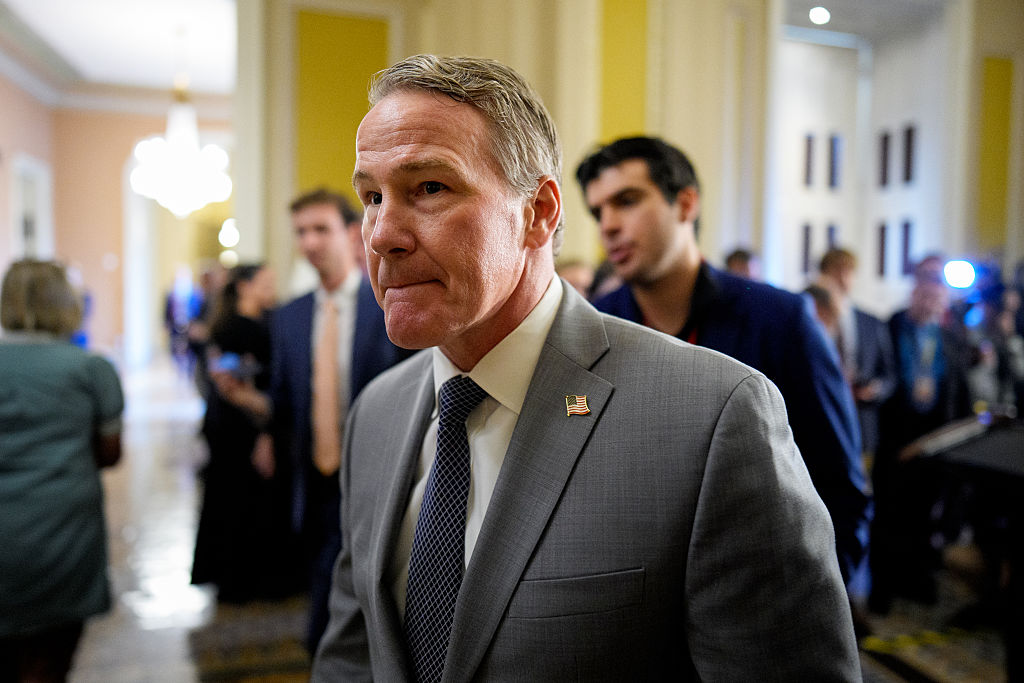
Senator Jon Husted Andrew Harnik/Getty
|
Practically every politician in the country right now wants to look tough on data centers, and a Senate vote on Wednesday could offer an easy way to do that. But amazingly, Democrats have mustered up the unity to try to sink the bill instead. The reason? The Ratepayer Protection Act isn’t really about protecting households from data center costs, Democratic senators say. It’s about the Ohio Senate race.
The Ratepayer Protection Act purports to stop the costs of data centers from being off-loaded onto Americans’ utility bills. Crucially though, the bill offers no enforcement mechanism, merely telling states to consider setting policies around this. At the end of this week, GOP Senator Jon Husted, the bill’s author, will be heading back to Ohio until after the midterms, where he faces a challenge from former Democratic Senator Sherrod Brown. Brown has made Husted’s past support for data centers a central part of the race, and Husted is eager to return home with a legislative victory, particularly one that addresses the controversial issue. Democrats are doing everything they can to prevent Husted from claiming a win.
"I just hope the American people see the political games that are being played," said Senator Andy Kim of New Jersey on Monday about the legislation. "It’s very clear that this is just moving forward because of political headwinds that Senator Husted and the Republicans are facing."
Brown’s attacks on Husted as "the face of data centers" have been relentless. It’s a logical strategy in a state like Ohio, where a recent poll of 1,000 likely voters found that 75 percent of respondents opposed or strongly opposed the construction of data centers in their areas. According to public affairs group Absecon Group, Brown’s campaign has spent over $430,000 on ads that mention data centers—and that count is for ads placed on Meta and YouTube alone.
Husted’s low name recognition with voters, combined with his past support for data centers, has made him an ideal target. "Into that void, Brown has made him known for data centers in the last few months," said David Niven, a professor at the University of Cincinnati. "It is rare in Ohio politics for Republicans to be scrambling, and they are scrambling to try and figure out how to remake Jon Husted."
The Senate version of the Ratepayer Protection Act mirrors a House bill that passed overwhelmingly on September 16. Only three House Democrats—Representatives Delia Ramirez, Summer Lee, and Rashida Tlaib—voted against that bill. When The New Republic covered that vote, experts said the measure wasn’t harmful but that it also wouldn’t actually do anything to advance its stated goal, i.e., lower utility costs for consumers.
Democratic senators are hammering this point home, even though the vast majority of their House colleagues voted for the bill. "As I analyze the bill, it literally says that utilities must ‘consider’" lowering costs," Senator Brian Schatz of Hawaii told TNR on Monday. "We’re lawmakers, not law-suggesters. If you want to reduce costs, you should mandate it." Senator Richard Blumenthal of Connecticut echoed that sentiment on Tuesday. "It provides nothing new, but it simply offers a fig leaf to Republicans who are seeking cover," he said.
There’s always the risk that voting down the bill could hurt Democrats with voters who want to see any action on data centers. "I think Americans are smart enough to see through a charade," said Blumenthal, perhaps optimistically.
It’s also not the only potentially controversial vote Democrats are facing this week. On Tuesday, the Senate voted on a resolution that would have required the government to issue a report on violence in the West Bank, forcing some senators to go on the record on Israel. (That resolution failed 47–51, with Pennsylvania Democrat John Fetterman the only Democrat to vote against.) The Senate may also consider a stock-trading ban on Wednesday, which has been championed by Husted and GOP Senator Pete Ricketts of Nebraska, who also faces a serious challenge in the midterms. Kim compared the stock-trading legislation to the Ratepayer Protection Act on the grounds that they both sound good but don’t go far enough (the stock-trading bill doesn’t require senators to divest from their currently held stocks, which Kim had long pushed for). On navigating the politics of these votes, he said: "I’m not going to be backed into a corner to support something that is just not good legislation."
|
David Corn on how Trump won—and the Democrats lost—the Russia messaging wars … Grace Segers on why Trump’s idea of banning diesel exports could backfire … Greg Sargent on how James Talarico is winning back Trump-voting Latinos.
|
California Governor Gavin Newsom signed a stack of bills Tuesday all aimed at curtailing Immigration and Customs Enforcement activities in the state. One banned ICE’s infamous electric shock gloves. Another creates a bill of rights for people detained. And perhaps the biggest deal is the so-called No Kings Act, which "would allow anyone to sue federal agents for violations of their constitutional rights," explains CalMatters reporter Nigel Duara in a piece laying out the new policies. "Under federal law, the only legal relief available now to people who sue agents of the U.S. government is a ‘Bivens’ action"—a very specialized type of federal lawsuit—Duara writes. The bill’s supporters say the new measure helps close an "accountability gap."
Michigan Senate candidate Abdul El-Sayed is making "a play for MAHA supporters," as The Washington Post puts it. His "Building a Healthier America" platform, released Tuesday, focuses on fighting pesticides and PFAS, while making school lunches healthier—all things MAHA supporters reportedly hoped (inexplicably) to see from the Trump administration, alongside the antivax stuff. So far, the Trump administration has delivered on the vaccine skepticism, while also doing just about everything one could imagine to pump more pollutants into the water supply. A lot of people will be watching what happens next in Michigan closely: Will MAHA voters actually defect to someone serious about environmental health—or was dismantling the vaccination schedule the true priority the whole time?
|
Thursday at 8:30 a.m., the Center for Strategic and International Studies will host a webinar on "energy policymaking in Southeast Asia" in the wake of the "Hormuz energy crisis." Jane Nakano will moderate a discussion with Alloysius Joko Purwanto and Christopher Len on how governments in the region are attempting to "absorb the shock."
Thursday at 2:30 p.m., the Center for American Progress will host a conversation between CAP CEO Neera Tanden and New Mexico Governor Michelle Lujan Grisham about "the landmark achievement of establishing New Mexico as the first state to offer universal child care."
|
W.W. Norton & Company, 368 pp., $29.81
|
|
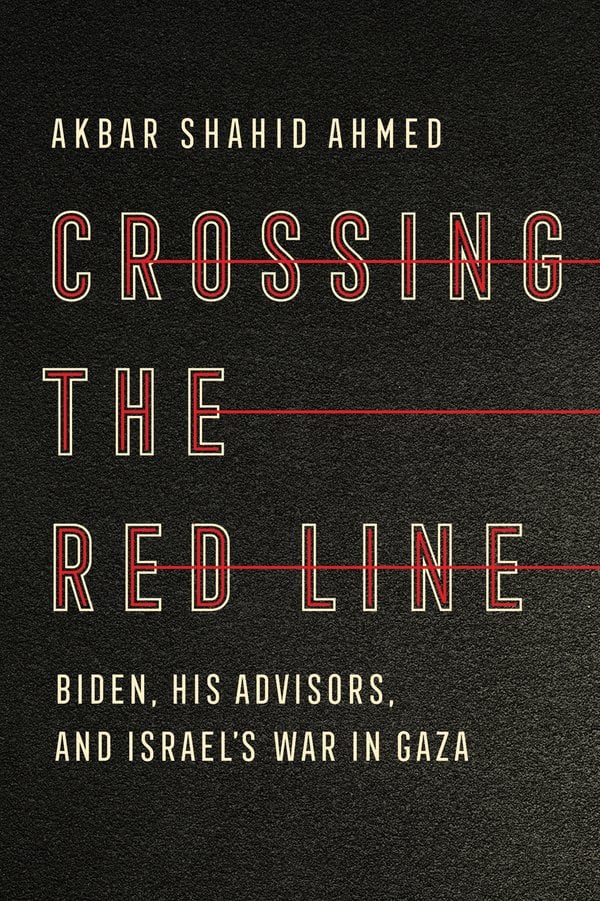
Crossing the Red Line: Biden, His Advisors, and Israel’s War in Gaza |
THE GIST: Ahmed, a reporter at The Washington Sun, has written a clear-eyed, penetrating, and ultimately damning chronicle of the Biden administration’s disastrous handling of Israel’s war in Gaza.
PRAISE: Ben Rhodes, deputy national security adviser under President Barack Obama, calls it "a meticulously reported record of the key moments, behind-the-scenes decisions and political rationalizations of a Biden administration that could not find a way to say no to the unthinkable."
CRUISING THE INDEX: Crossing the Red Line’s clear chronological narrative shows how a small cabal of administration officials made a series of blunders and intentional decisions that allowed Israel’s murderous campaign in Gaza to continue more or less unabated. But even more disturbingly, it leaves readers with the lingering sense that many in the administration knew precisely how Israel would use the weapons that it sent—and then used what one official described as "mental gymnastics" to justify sending them anyway.
TNR’S QUICK CRITICAL ASSESSMENT: This is a story about how (mostly) well-meaning people can aid in horrific acts—and then attempt to justify them. But the book also suggests that Israel’s blatant war crimes may have permanently altered global warfare. "In charting the Biden team’s moves amid the dust of their shattered red line," Ahmed writes, "I became gripped by an unshakable vision of the darker future the Gaza war ensures: The next blood bath will be easier to normalize. Its victims could include any of us."
|
|
|
POLITICAL TRIVIA QUESTION OF THE DAY
|
|
|
|
On the subject of the Iraq War: One member of the George W. Bush administration and leading architect of the war was asked, while testifying before Congress in April 2004, how many U.S. soldiers had died in the war—and gave an answer that wasn’t even close. Who was it? |
Yesterday’s question and answer:
Q: On this day in 1962, President Kennedy authorized the use of federal troops to integrate what public university?
A: The University of Mississippi.
By Michael Tomasky
|
|
|
GET IN TOUCH WITH US
Democratic Hill staffers and political operatives, progressive activists and think tankers and insiders—have a news tip for us, or a thought about something you think we should cover? Let us know by writing to thebluebook@tnr.com. Our staff is small, but we'll do our best!
|
|
|
|
|
|
Were you forwarded this email? This is The TNR Blue Book—the only newsletter that takes you inside what’s happening with the Democrats on Capitol Hill and beyond, and in the world of progressive debate and ideas. Sign up for free.
|
|
|
|
|
|
|